Enterprise automotive documentation across owner’s manuals, engine room labels, key tags, windshield labels, smartphone app UI elements, and the full reference library behind them — executed in close collaboration with engineering teams in Canada and Japan, and controlled across regional markets and brands.
Vehicle windshield application guides, owner’s manuals, engine room labels, key tags, and smartphone app UI elements — all built to stay in lockstep across regional markets and brands, in direct collaboration with engineering teams in Canada and Japan. A single spec change anywhere in the system had to be traced and reconciled across every regional variant before it shipped.
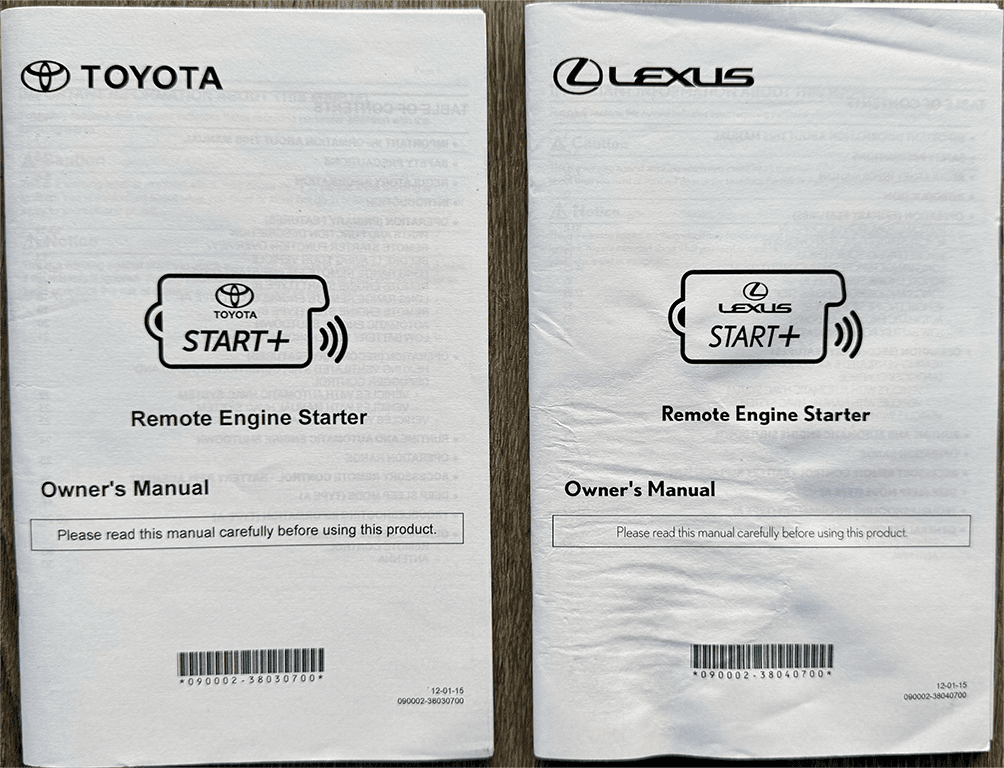
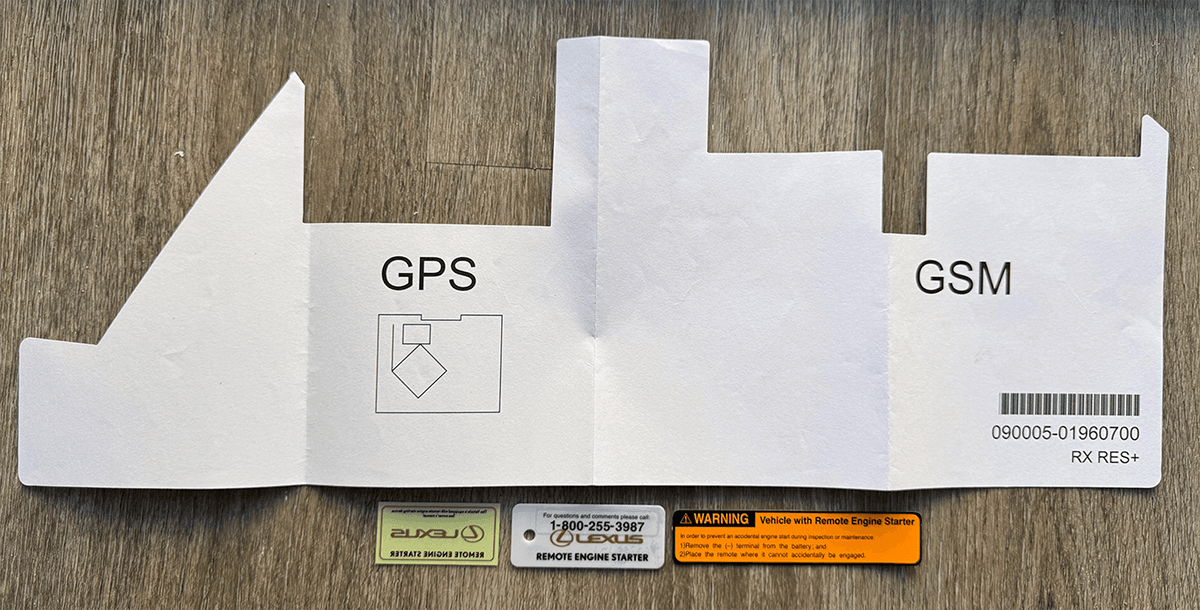
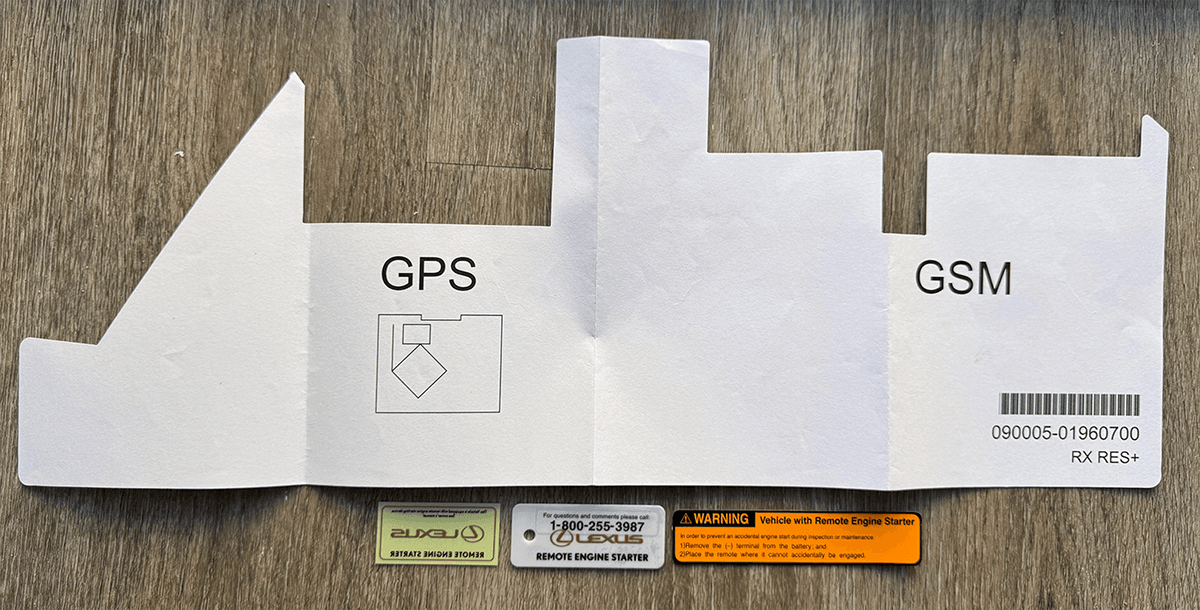
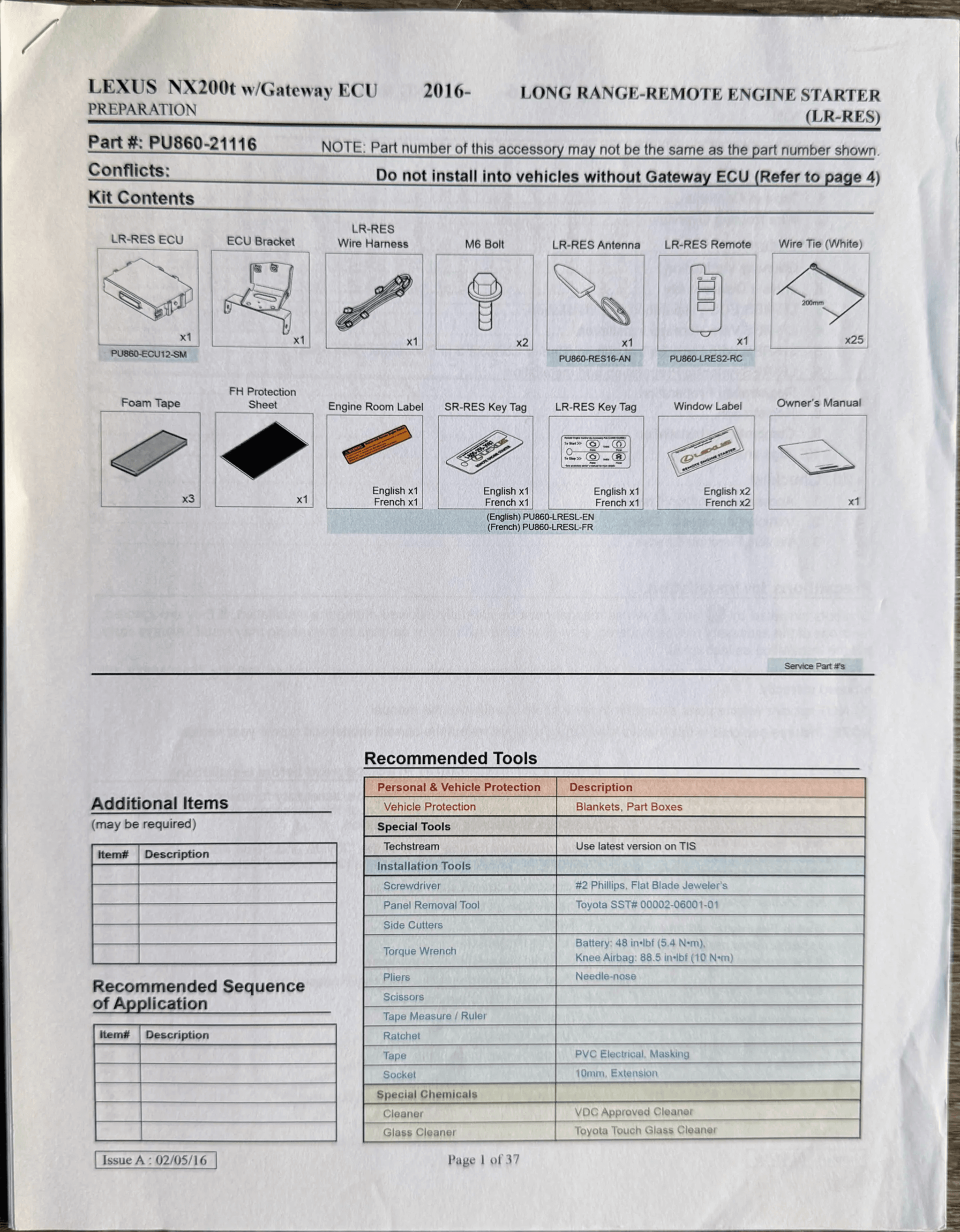
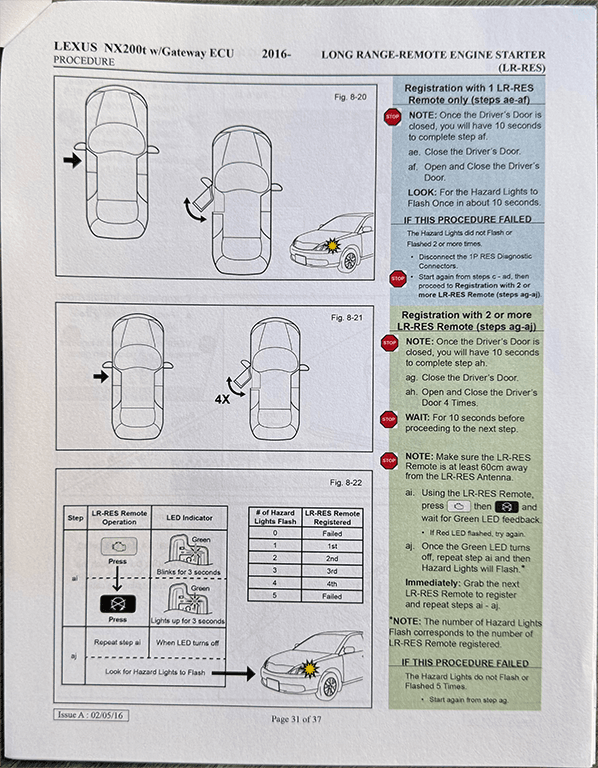
A full installation guide for a remote engine starter kit, with a cover designed to double as an at-a-glance contents reference for what ships in the box. Paired with a detailed checks-and-procedures reference for port installers and dealership techs — portions of which were then simplified and migrated into the consumer-facing smartphone app for activation and range troubleshooting.
Supplemental and addendum updates were carefully controlled across vehicle platforms as new findings came in — continuously, from any division involved in research and development. Keeping every platform’s documentation accurate meant tracking incoming issues and updates from multiple teams at once and reconciling them without letting any platform fall out of sync.
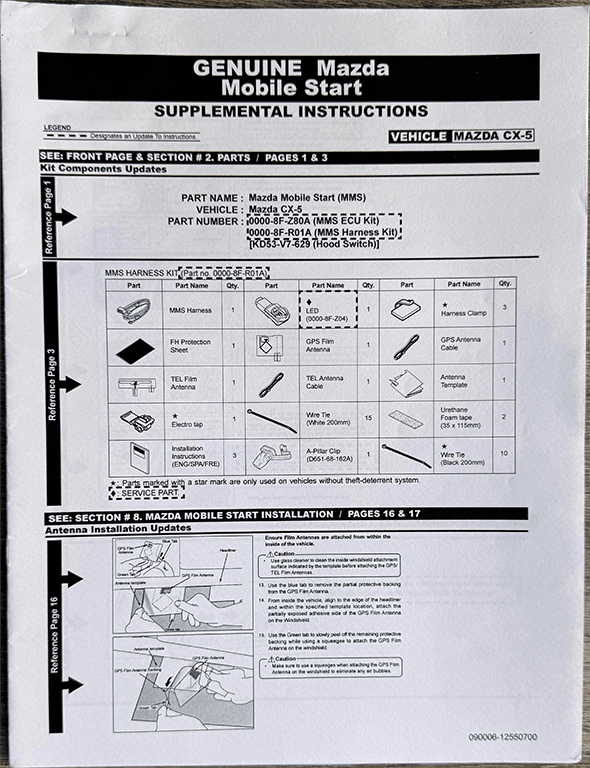
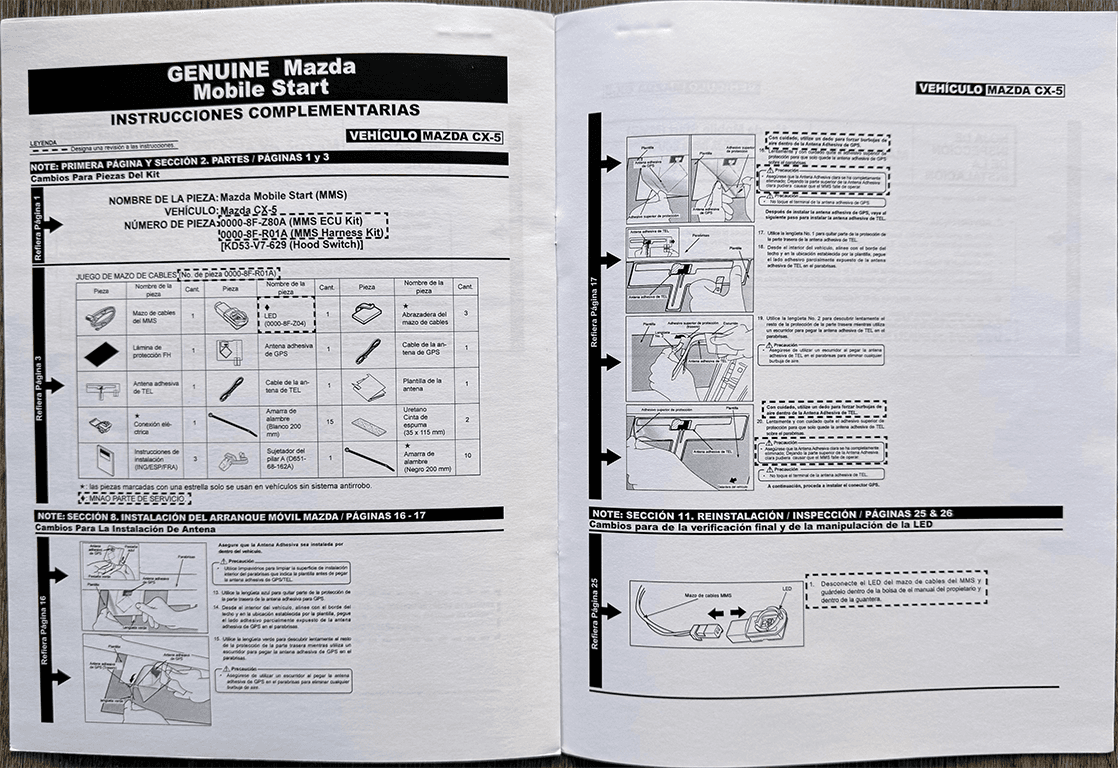
For each manufacturer, I built dedicated style guides governing how incoming photography was evaluated and documented — image clarity, conflicting or distracting surrounding systems, and other best-practice criteria specific to that brand. Line art was produced in-house, then composited with an existing library of common hardware and human-hand reference imagery to keep every diagram visually consistent across thousands of documentation pages.
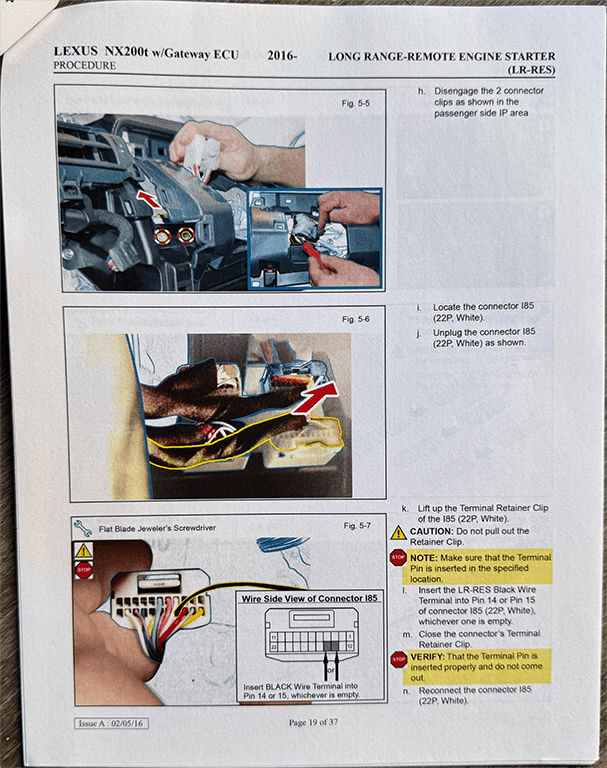
See the same production discipline applied to packaging →Not every procedure was best served by line art. For certain applications, procedure documentation was built from composited and color-corrected photographs instead — a different production method from the line-art-plus-composited-hardware approach used elsewhere, chosen when photographic clarity communicated a step more reliably than illustration.